Monday, July 17, 2017
Blog expansion?
Wednesday, July 27, 2016
Who’s Doing The Work in Mrs. Sadler’s 2nd Grade?
The concept is one that's easy enough to grasp…kids should be doing most of the reading, thinking and responding in reading…true. But they don’t, not in my case anyway.
Enter Next Generation Literacy.
There are a few hallmarks of next generation literacy I want to highlight
1. Student Agency
2. Gradual Release of Responsibility
3. Beginning with the end in mind.
Understanding these hallmarks will prepare you to embark on a professional path for growing proficient and independent readers and children who learn to love reading in a way I never imagined.
-Student Agency- When students become agentive readers, they are reading for a particular result, in this case being independent and proficient readers. It is our end game, it is the students end game. No child wakes up and says “Hey! I want to have a hard time with the what I am reading today in Mrs. Sadler’s class!”
-The gradual release of responsibility- Are the instructional contexts with which children engage. The gradual release goes form Read Aloud, Shared Reading (at all levels) Guided Reading (which will truly surprise you!), all the way to independent reading. It becomes a beauty of a dance indeed!
-Beginning with the end in mind- Goes back to agency, our end game of moving readers to an independent place, reading proficiently so we can guide them to more challenging texts and the process begins again!
Students have been programmed to depend on the teacher for so much when we are teaching them to read. And that is fine for them to do this…we are their teachers after all…But when I think of just how much reading instruction my second graders have had coming in, I know they have strategies, they need to allowed to use them without my interference! I think of it more as coaching...Burkins and Yaris compare Next Generation Literacy with learning to dance.
Where do you begin?
In order to move into Next Generation Literacy, I feel like you need TWO things to GET STARTED.
1. An analyzed running record
2. Access to a good quality, engaging children’s literature.
“I know what level my students are on, I should be able to jump right in!” was my first thought. But then I read this line from Who’s Doing The Work…”Next Generation thinking considers HOW students read as much as WHERE in the text gradient they read. The fact is, the Guided Reading Level tells us very little about what each student DOES when they read, it just tells us where the student should be given instruction. But even then, it doesn’t really tell us how to instruct those students. Only the student can tell us that and that information can only be uncovered by listening to students read and analyzing what they do. Fountas and Pinnell even say that we need to move beyond just the level and focus on the process. (J. Burkins, K.Yaris, WDTW 2016)
This is my daughter’s running record
.
I already know this text is a frustrational level text for her due to her accuracy rate. Lots of errors, but what I am loving about this running record is although she isn’t self correcting/self monitoring often, its there. She is heavily reliant on print strategies to get her through a text. I know she will need to fill her tool box with an arsenal of print strategies but then she is going to have to work on USING them more often. You won’t find me prompting her all the way through a guided reading lesson, no way. When she stops and says nothing and looks to me, I will simply ask her, “what are you going to do? When she says “I don’t know”, and she does, I'll simply remind her to think about what she knows and remind her she has a notebook of strategies to help her out. I will create a group of students who have similar instructional needs and within a few levels on the text gradient.
The next need I had to address what my embarrassing lack of engaging children’s literature and of what is most current for kids. I have been a teacher for 16 years. I have been a teacher mom for 7 of those years. I used a basal. Basals are not the enemy. But kids cannot learn to read by a basal alone
I can’t do these things with every single story in my basal each week. Likely, no teacher can. I have to beef up my classroom library with different genres and formats. I will reach out to our library/media specialist and ask her to find great titles, I have already reached out to our children’s librarian at the public library to pull together some current titles that are browsed and checked out often to kids and other teachers. We have a university near by (I am alumni!! Go Colonels!) which I can also utilize this as they garner the best reviewed and most current children’s literature! I am going to really utilize my scholastic teacher bonus points this year. I will ask for books when I am asked by parents “what do you need for your classroom?” We have a growing book room at my school that I know is underutilized. The bookroom and I are going to become close friends! (In an effort not to make this the longest post in history, I am putting together a companion post on some of my favorite to teach with books and hopefully, you all will add to my list!)
In order to focus on students’ reading processes and engage them to keep reading, these are great first steps in Next Generation Literacy. I feel like I am seeing my reading life through new and refreshed lenses and will finally be making a more profound impact on the reading lives of my students. And that is exciting stuff!
Check back in a month when I will be highlighting Read Aloud...the first rung on the ladder of gradual release of responsibility.
Until then!
Tuesday, July 19, 2016
Social Media and Solid Evidence Based Professional Development…Who Knew???
Fast forward a school year…I wanted and needed more for my professional growth plan. The previous study gave me roots in accomplishing differentiated learning in my classroom…a place from which to grow. I had different levels for each of my students, we were all reading different things in our groups, we were doing slightly different activities in each of those groups and students book baskets contained instructional level texts…I thought I was good to go. But I didn’t feel like I was where I wanted to be with this process.
I found my next book, my most teacher mom life changing book on a SmartBrief emailing I get as a national board certified teacher.
It looked like a nice cover (
I am in a couple of Facebook groups for teachers of reading and one of them is The Literacy Teachers Book Club
A book study was beginning for Who’s Doing The Work and what do you know, that just happened to be the title I had purchased a month prior. So I dove right in, about two week late. The book study was a 6 week process by which the group administrator posted discussions for participants each week and ideally, you read the chapter and shared your insights into the discussion posts, questions you might have had and in this case, classroom application and implications. I am not sure if the administrator used the published study guided or not, but in many Facebook book studies they do. But here is what I LOVE about the process…I came in two weeks late AND was able to catch up at a pace which worked with my teacher mom schedule! I was also afforded a window into how teachers across the country were using this material and how I can make it work in my classroom, in my district, with my students. A GIANT plus, there were not just teachers in the group. There were professors of literacy, published authors and the authors of the book themselves. Yep! I was able to study the book with the authors who wrote the book. AND was able to get feedback on my ideas for application in my classroom from the Jan Burkins and Kim Yaris themselves. I was able to stay here at my house with my kids, take care of their needs and wants, I didn't have to dress for work and nor did have to get up early on my summer vacation. Another win win!
The second professional development avenue I was able to explore for the very first time was Twitter. I have had a Twitter account for a while,(you can follow me here!) but I never really understood how to use it. I was turned on to a twitter chat through this same Facebook group. The name of of the twitter chat is #G2Great and Dr. Mary Howard brought me into it. You can follow her here and let me tell you…you want to feel good about your teaching practice, tweet with her once and she will build you up!! She is the author of the book Good to Great Teaching and co moderator of the twitter chat of the same name. She was even so kind to inform me of how it worked and what I needed to do. She turned me onto a very important website for participating in twitter chats…
Tweet Deck Twitter chats are fast paced and allow you to think about the content in smaller chunks which even though its fast, the information you get is in such small pieces, its pretty easy to digest. Tweet Deck keeps it all organized and easy to follow. (At the time of this post, Tweet deck is only available in the app store and google chrome.)
This platform connected me to so many other literacy professionals who have some new and innovative approaches to how children learn to read and the newest and best classroom tested, evidenced based practices.
Whether or not your building administration will grant you professional development credit, this social platform is growing in its ability to deliver evidenced based content to teachers and others in the educational community. This was the development I needed at this time in my teaching career and I just had to go for it. Credit or no credit, Its a responsibility to my students and to my profession to keep on learning for the sake of learning itself.
Ssssssssoooooo,,,Finally social media that is worth my time as a a teacher and a mom.
Thanks for stopping in and see you soon!!
Sunday, May 1, 2016
Teacher Appreciation!

![]() | ||
| Here is my freebie for you because, I appreciate you! |
Monday, April 25, 2016
APP life-teacher apps
Sunday, April 24, 2016
Using MyFitnessPal to track 21 Day Fix containers
Tuesday, April 19, 2016
Sometimes changing everything is a good thing...
Monday, April 18, 2016
Monday, March 28, 2016
Interactive notebooks
Anyone using interactive notebooks? I've been browsing them on Pinterest after Angie Olsen's newsletter from March came out...I've have an interactive notebook set from Nicole Shelby for all of language arts. Its great in content, but I can really figure out how to fit them into guided reading whole group time frame. I can see the use for sure, but my days are pretty strict. I look forward to reading your thoughts, suggestions, etc.
Thursday, March 10, 2016
Wednesday, January 20, 2016
Hopefully this works...
Monday, August 24, 2015
And the Winners ARE.......
Thursday, August 20, 2015
TPT sale fail…
a Rafflecopter giveaway
Monday, August 17, 2015
The Next Step In Guided Reading…Chapter 6-The Fluent Reader
This chapter couldn’t come at a better time for me. I am currently teaching a 1/2 split and this is my first time teaching this. One thing that I noticed is that the kiddos that read fluently sometimes struggle with comprehension. I have always wondered what is the best way to teach them. The first part of chapter 6 is perfect for teaching those fluent kiddos comprehension skills. Three things I learned…. 1. Comprehension instruction is part of every guided reading lesson! It is especially important with fluent readers. Fluent readers have few problems decoding, therefore they are able to explore the process of comprehension. We need to make sure that a text has just enough of a challenge to make the students “work at it”. 2. Assessments are key in creating small groups. The book has a summary chart to use for fluent readers. This chart is used for students reading fluently at or above Level N. You will use fiction and nonfiction text to complete the chart. It is possible for a student to be proficient in a comprehension strategy on fiction but not on nonfiction. The chart will let you know what strategies you need to teach and which genre you need to use for your small groups. Make sure to reevaluate your groups once a month and limit your groups to six students. 3. Strong guided reading lessons at the fluent level focus on specific strategies. Model the strategy, then students work independently as you work with others. The goal in your small groups is to construct meaning of the text. Classroom Implications…. One thing that I will be doing that I have NEVER done before is group students by the comprehension strategy that they need to work on. Also they don’t need to read the entire text all the time. Once they have achieved the instructional objective, they don’t have to read the entire text. The materials that you will need for fluent guided reading…… · assessment kit · texts in a variety of genres-fiction, nonfiction, poetry, etc. · copies of lesson plan · dry erase board and marker (for teacher) · reading notebooks for student responses · comprehension scaffold cards-make six sets of each chard and laminate them · 6 copies of the vocabulary strategies cards · sticky notes · timer After students finish reading the book, help them extend their understanding by writing with support for 20 minutes. Comprehension Strategies, Scaffolds, and Prompts: https://docs.google.com/viewer?a=v&pid=sites&srcid=ZGVmYXVsdGRvbWFpbnxqYW5yaWNoYXJkc29ucmVhZGluZ3xneDpmYzM4Yjc3MGI4YmQxZA Fluent Guided Reading Lesson Plan: https://docs.google.com/viewer?a=v&pid=sites&srcid=ZGVmYXVsdGRvbWFpbnxqYW5yaWNoYXJkc29ucmVhZGluZ3xneDozZWZmZGQ3ZWNiZGUwMGQz Comprehension Cards: https://docs.google.com/viewer?a=v&pid=sites&srcid=ZGVmYXVsdGRvbWFpbnxqYW5yaWNoYXJkc29ucmVhZGluZ3xneDoyNmNlMWU1ZTJmNjVlNzc0 For an assessment grid for more intentional group planning check out this link as well… http://1drv.ms/1TKnwKv
Monday, August 10, 2015
Transitional Guided Readers from The Next Step In Guided Reading…
If you teach grades 1-3, you have seen them…sometimes they are seen in K and even sometimes in grade 4…They are the transitional readers…
.
1. Assessment for these guys is fairly simple since you should have access to data from previous guided reading assessments. All you really need to assess these kiddos is a running record with some comprehension questions and a word study inventory. The guided reading assessment allows you to identify which guided reading instructional level for the student and the word study inventory allows you to know which word study skills you can work on with that student during small group instruction.
2. Transitional readers can and often are a diverse group of readers…They come with control of many skills but also demonstrate the need for quality instruction in many areas. You can group students within two GR levels apart in your guided reading groupings, but pay attention to the running record and your other assessment data…just because the guided reading levels are close, the reading strategies and sub-skills may be very different. The great thing about the lesson plan for this group of readers is that it leaves much room for differentiating within the groups, but you don’t want to make yourself go crazy. Try to keep things together when you group so you are able to stay focused on instruction.
3. This is NOT A TIME FOR STUDENTS TO READ SILENTLY. Transitional readers are still learning much about how to read. This group is a great place to make use of anecdotal records when working with students during guided reading time. When these students are reading during the first two-three days (10-15 of the entire guided reading lesson, you are going to listening to students read and coach with teaching points specific to that students needs. You are going to be taking notes about what strategies they are using and over what skills and strategies you coached them. Looking over these notes will allow you to make instructional decisions about whether or not that student is ready to move to a different GR level and also possibly to another group.
4. The average rate of progress for transitional readers is one alphabetic level every 8-9 weeks. If you are familiar with RTI, that is the optima time frame for tier instruction before making further instructional decisions.
5. FLUENCY…this is like the dirty “F” word of the reading world. I am not going to go into that debate other than to say I think fluency has a bearing on comprehension. But, I learned from this chapter that students will certainly display a higher rate of fluency with literary text than they will with informational text for two very very good reasons. One being the diet of reading material in the world of a young child. They are exposed to so many more literary texts from birth to transitional readerhood and they are very familiar with the format. Informational texts are presented in several organizational structures and the exposure to them is not as prevalent. Students are reading these for a different purpose, to gain information. Thus to digest the information, this text type they read more slowly and take information in from graphic sources as well. I certainly do and I am guessing you do as well.
6. There will be fluent decoders, who need work in the basic retellings of text and you will teach them to retell literary then teach them to retell informational text. One is easier than the other to teach based on the same fluency principle listed in bullet 5.
There was a lot to learn from the reading of this chapter But before I move on, there was one quote that I will carry with me…
1. The lesson sequence for transitional readers is typically 3 days. It can be 4 depending on the length and complexity of the text and if your group is working on mostly decoding and fluency or are your working more toward monitoring for meaning and deeper comprehension. This works great for the typical schedule of whole group Mondays, small groups on Tuesday-Thursday and Friday Assessment days!
2. I said it before and it is true with these students…They won’t all need word study. This is part of the lesson plan structure for transitional guided reading but when you go back to your initial assessment data and look at the word study inventory, some will have mastered them and you can devote more time to teaching comprehension strategies.
3. Guided Writing!!! This is the biggest and best classroom implication for transitional guided readers. This is the most important when you are working within the Common Core Standards. I know not everyone reading this is held to these standards. However, being able to respond to reading is important no matter what standards to which you are held accountable. During guided writing, students are learning to respond to text through a written retelling of what they read. They write, with your support and guidance, a coherent, vivid, rich retelling of text. They practice many important conventions during this time like spelling, organization, complete sentences, mechanics and varied sentence structures. All this happens because you are right there to guide them through the process.
Please check out my other #guidedreadinggals buddies by clicking on the links below!
Thanks for reading!!!
Tuesday, July 28, 2015
The Next Step In Guided Reading Chapter 3 Pre A and Emergent Readers…
If you know me, the really little people kind of intimidate me in the classroom. Kindergarten teachers are a rare breed of teacher and I truly love and respect each and every one of you. This chapter was so great to read as I have an emergent reader right here in my home! I was ready to play school with her after reading this chapter but she was having none of that, because she didn’t get to be the teacher!!! Oh well…it is what it is.
My sweet bloggy friend Julie has a full run down of chapter three at her blog. Click the picture below the get the full chapter 3 synopsis.
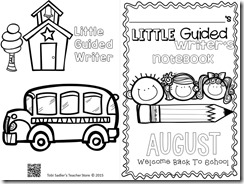
This chapter focuses on how the lessons are structured and paced and the activities which are included in a preA reading lesson and the emergent reading lessons for GR levels A-C. My big moment was the guided writing for these little guys! I love how the reading and writing are put together in the lesson and that the writing is very much a window into what the children have control of…. I have put together the first in a series of monthly little guided writers notebooks. In this bundle, you will get August and September because we all start at different times!!! I am offering them in my store for 50% for 24 hours! Click either pic to snag this resource!!! and don’t forget to check out Julie’s blog post about amazing emergent readers!!!
Saturday, July 25, 2015
Assessment! Ch. 2 of The Next Step In Guided Reading…
To read a full chapter 2 run down please visit #guidedreadinggal Laura at Where the Magic Happens
This is an incredible post which you should really check out!
Chapter 1 presented by my bloggy #guidedreadinggals buddy is in the books and there was a lot to be learned about setting up a classroom for guided reading. Chapter 2 is all about the next logical step to getting started and that is Assessment…I had an epiphany when reading this chapter (I really felt like Jan Richardson was channeling me as she wrote this book). Assessment does not look the same at all grade levels and you really can’t use the same assessment tools with kinders as you would use with a fourth grader! There, I said it! It is out in the world and I can never reel those words back in! But, I don’t think I want to either. K’s and 1’s have a very specific set of reading assessments which are going to include phonemic awareness and phonetic principals like sounds and letter identification, then onto sight words if they have control of letter sounds and identification. Dictated sentences, a writing sample and an oral running record from text…Shewwwww! I am tired and I haven’t give any of those tests yet! What I thought was interesting was the stark contrast in the assessments given to intermediate students. This is where I have spent the bulk of my teaching career, is with age group, so these were simple for me to churn out…Jan Richardson says the best assessment we can give is a leveled passage with comprehension questions. I go a bit deeper than just that. I take a running record with it, I assess fluency, I do a simple retelling and then if all that checks out then I can ask those burning comprehension questions. As I read further in, I found there to be little more to it…there is a process for assessing below grade level decoders of text and then a process for those students on or above intermediate grade level…
I was left with a burning question and this is still burning even with having given reading assessments for the last 15 years…How many comprehension questions? And do you ask them orally or do you send them off to answer those on their own? What do you think? Do you think comprehension questions are necessary if the student can retell or give the main idea? My school says four to five questions but it has to be a uniformed decision of our school so we have reliable data. As far as how the comprehension questions are answered for me, depends on the age and reading level of the reader. If I don’t think they will have issue, then I will allow them to work on the questions while I assess another student. If I am not feeling it, then I will ask the questions myself. I always make note of this in my assessment notebook tab for this student. What do you think? I am interested and I want your thoughts! You can leave your comments here with me or head over to the We <3 Guided Reading Facebook group and join in the discussion over there as well. Search us with the tag #guidedreadinggals
So, thanks for hanging with me today! As a show of thanks, I wanted to share a tool that I have used for years for tracking data. This is my Assessment and Progress Monitoring Kit. It is a great visual tool for showing where students fall in their reading journey and how for they have to move in order to be on grade level. This tool is what I use to track my students assessment results. I keep it in a binder under a tab for each student and fill in their results. I then have a useful tool for communication with parents and my running progress monitoring for progress reports and RtI. You can get if for free for the next 24 hours and after that the link will expire and you can get in my store. Either click the link above or the picture will take you there as well…
Last Chapter of the CAFE! I had an A-HA moment…
I read it cover to cover! I have NEVER done that with a professional book and am well on my way to reading two cover to cover this year! Put that in my bucket list! I know, sad existence:) Also, I should have had this post ready and posted Wednesday but my week has gotten away from me? Sorry :)
Any way! I read chapter 7 of the CAFE book and took away much from it. Chapter 7 is about the strategy groups. The sisters do not do guided reading groups. The strategy group is the method which was born of guided reading groups for them. The kids in the guided reading groups were never really flexing. As the students improved, the level just changed and the kids never seemed to. I took from this chapter that even within the guided reading group, multiple needs still existed. I have experienced that and found myself shifting toward students all around my table teaching mini lessons on the spot based on those kids needs. The chapter mentioned a strategy group assessment but I couldn’t seem to locate it in the chapter or in the appendix. If you know where it is, totally leave me a comment and make sure you are not a “no reply” blogger. I like to send some love you way!
Page 109 had some great information to share about strategy groups. The sister said they just didn’t wake up one morning with “an epiphany and switch all our groups from leveled guided reading strategy groups” Instead the did one strategy group at a time, still using guided reading groups for quite some time. They also indicated that the strategy being addressed by that group sort of dictated when that group would flex out. Some strategies take longer to get control over due to their complexity and/or sophistication and/or how well the children were mastering said strategy.
So…here are some of my #realtalk feelings, thoughts, concerns etc.
I love this idea and the richness that strategy groups can bring to literacy instruction. The concept is ginormous. Such a benefit for every child in your classroom. I am in a district which requires the use of guided reading levels for progress monitoring. We also just spent, district monies, a whole lotta cash to purchase the Journey’s series from Houghton Mifflin. So, I feel so stuck. But, I think I know what I can do. Start small and smart. Start with the individual conferences for kids who just don’t fit in your groups. This is so tier 2 and if you have the conference records and assessment data for progress monitoring then you are already like 25 steps ahead of most folks in your building:) I can see letting go of the GRL for those high performing students and using these deeper strategies for a book study and really truly and finally meeting the needs of those kids. Right now the ideas for strategies groups and how the make them work in a guided reading world are just flooding my brain! I think this is setting me up for a post down the road and possible PD offering for my people. I could include you all too if you were so inclined. If I get some interest, I will set it up and let you know how we can do this. I am so very excited right now! #teachersteachingteachers is really a great way to expand your knowledgebase!!
Thanks for sticking with me through my reading and sharing of the CAFE book! I hope it gave you something to think about and ways you to can make reading instruction work for you!
Wednesday, July 15, 2015
CAFE Chapters 5 and 6…
I am so glad I hung in for these two chapters….These are what I as a mostly visual learner need when I am learning new strategies and tips for managing and teaching my classroom…EXAMPLES!!!
Chapter 5 is all about the individual conference with students and the mini lesson. One take away from this chapter is reminding students about their goals. Many students I have found in my own experience fail to see the connection to why we do anything at school other than occupy their time or they think the goal to say to teachers is to get better at reading. While that is a valid goal, goals for reading need to be very specific and tailored to the learners needs. Moser and Boushey would remind the learner of their goal. It was one of the parameters of the conference itself. Most students in the examples were ELL’s and could not articulate their goals or remember them. So a reminder at each conference is well served!
My favorite highlighted strategy is flip the sound and I can see it being very helpful for my students. Also combining the check for understanding strategy and pulling it into a summary! That is really going to work wonders for my kids this year. I have taught it in a similar way in the past but it never connected well…I can see my kids bridging the strategy with this approach! Especially since the Sister’s have a menu of really concentrated strategies and they are repeatedly hit over and over as the school year progresses!
This is echoed in Chapter 6 for whole group lessons…Keep it short for short attention spans and then allow the bulk of your time to be spent on strategy group lessons and individual conferences. Hit this scaled down selection of the best and most used reading strategies often and build upon them daily. Having said this, I don’t know how in the world I will get in three whole group sessions a day. I know I can do two a day but I still will have to work into that….We have a new reading series and a pacing guide in development so that has to be followed. I can see me having to make CAFE fit into this mold and not the other way around. This is a formality at best but this is my teaching reality. I know from this chapter that I will need to hit comprehension and accuracy strategies in whole group mini lessons and my fluency and expanding vocabulary can be taught very easily through modeling and think alouds during read alouds.
Tune in next Wednesday for Chapter 7 and 8!!!! Thanks for stopping by today!
Monday, July 13, 2015
What A FUN, WET N’ WILD Day!!!!
My son, my last born, my little tiny baby, turned 3 and we had his birthday party yesterday. I love having parties for my babies. This year he has loved Thomas the Train and Toy Story so we went with a Toy Story theme! His sweet little cake, his banner and bunting…I had his cake made, but the banner and bunting I did with my trusty PC and a little program I like to call PowerPoint.
He was one happy little boy if you can’t tell!! Look at that grin! He is a boss on this thing and has been riding his sisters around the yard at top speed all day!!!
Today I went to school and we got to work on our CLASS LISTS!!!! This has always been such an exciting time for me. I love seeing the names of the students who will be in my new class for the the upcoming school year. I learn so much by talking to their teachers from last year. They are always so concerned for them to be taken care of and loved on but also that they are in the right classroom so their best can shine. I think I am going to have a really, really, really great class next year. I already know a lot of them just through hallway connections alone. I am looking forward to getting to know them all and preparing for their arrival in 4 short weeks. We start school on August 12 and I am starting to get the pre- opening day jitters already!!!!
Also today, my part of the world had the storm of the century it seemed! There was wind, there was sideways rain and a river is running over my neighbor’s driveway. The electricity went out briefly. I got all jazzed up like I always do in a good storm. #inmyreallifeimastormchaser I would totally chase storms if I didn’t have the sweet life I have with my little family… Here are some of the highlights!
To say we are a little waterlogged is grossly understated! I think this is our hundred year flood year!!!
To keep myself busy during the storm I pulled out my copy of “The NEXT Step In Guided Reading by Jan Richardson. I have been reading this book as part of a collaborative online book study with #theguidedreadinggals.
Our study launched today and the first chapter is live with Marie Lee at the Literacy Spot.
Click on her button to read more about chapter 1 and check back each Monday for another chapter. Chapter 1 is all about the research behind guided reading and what the other kids are doing when your are doing guided reading with your small group. I was hooked after my read of chapter 1 and I know you will be as well. Click on the button to go to the Literacy Spot and check out some of the other #guidedreadinggals blogs as well!!! You can also find us at the We <3 Guided Reading Facebook Group to follow our post blog discusson!!!